What Website Downtime Actually Costs a Small Business
Tanvir Mahedi
Author
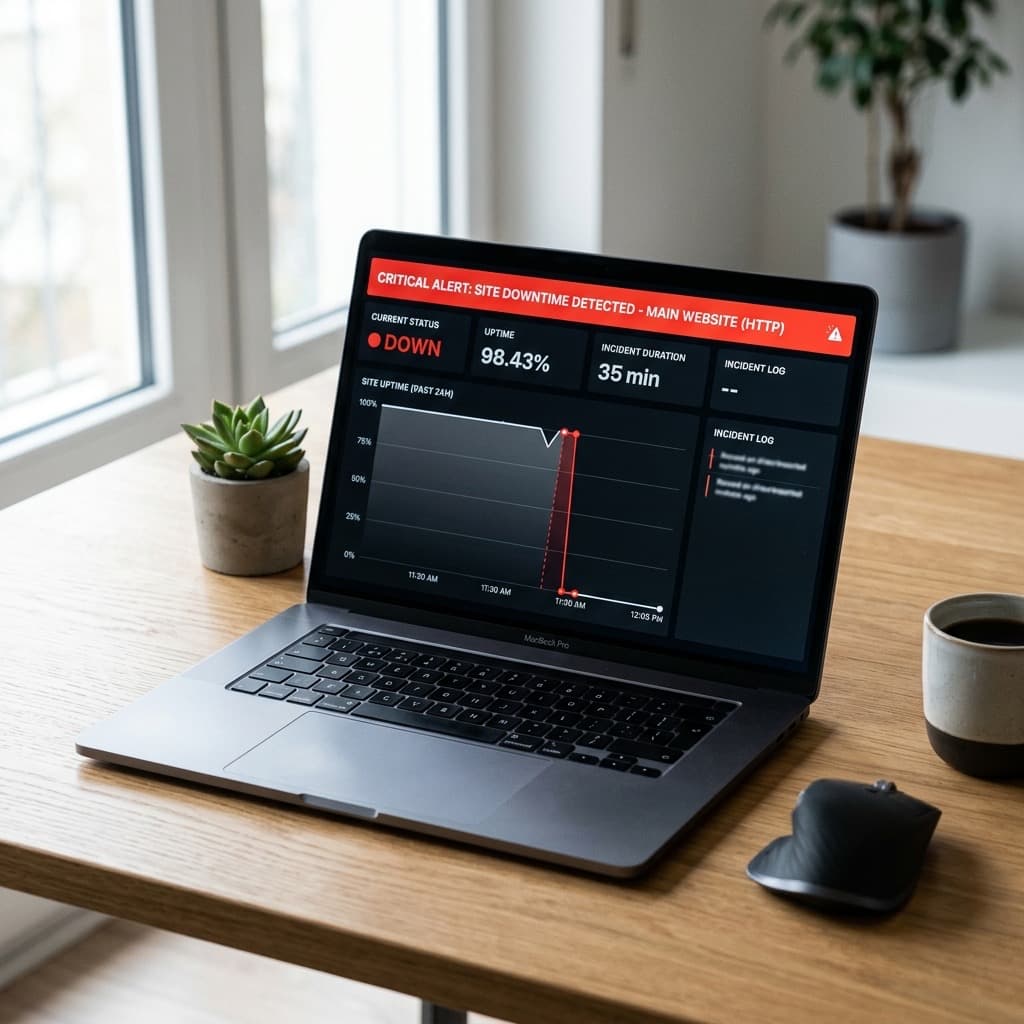
"The site will just be down for a bit" sounds like a minor inconvenience — until you put a real number next to it. Here's what website downtime actually costs, why the damage goes well beyond the sales you lose while it's down, and what actually causes most small-business outages in the first place.
How Much an Hour of Downtime Actually Costs
The honest answer is "it depends on your business" — but the ranges researchers have put on it are still worth knowing. One analysis focused specifically on small businesses under $10M in annual revenue found an average cost of $427 per minute of downtime, which works out to over $51,000 for a two-hour outage. Other small-business estimates put the range at roughly $8,000–$25,000 per hour, depending on how much of the business runs through the site — a business that takes bookings or sells directly online loses far more per hour than one using its site mainly for information and lead generation.
Enterprise-scale figures you'll see cited elsewhere — six figures per hour, hundreds of millions per year in aggregate — come from research on much larger organizations and aren't a fair comparison for a small business. The small-business-specific numbers above are the ones that actually apply.
It's Not Just the Lost Sales
The revenue lost during the outage itself is usually the smallest part of the real cost. Industry research on downtime's broader impact points to several costs that don't show up until afterward:
- Customer trust. Visitors who hit a broken site during an outage don't always come back to check again later — some just go to a competitor instead.
- Direct customer loss. Nearly 3 in 10 organizations (29%) report losing customers directly because of a downtime incident, not just losing that day's transactions.
- Recovery time. Diagnosing what broke, fixing it, and confirming everything works again takes staff time that isn't going toward anything else that day.
- Reputational spillover. A site that's down during a moment someone was specifically trying to reach you — after seeing an ad, during a launch, right after a referral — costs more than the same outage on a random Tuesday.
How Often This Actually Happens
This isn't a rare, freak-accident risk. Industry monitoring data puts the average small business at 2–3 significant outages per year. Most of those incidents are short and might resolve on their own — but "significant" here means long enough, or badly-timed enough, to actually cost something. Over a few years, that adds up to a real, recurring line item most small businesses aren't budgeting for because nobody's tracking it.
What Actually Causes Small-Business Downtime
Downtime rarely comes from a single dramatic server failure. In practice, it's almost always one of a handful of mundane, preventable causes:
- Expired domains, SSL certificates, or hosting. A renewal that lapses because nobody was watching the calendar is one of the single most common causes of a site going dark.
- A plugin or software update that breaks something. Updates matter for security, but applying one without a backup or a way to roll back is a common way a routine update turns into an outage.
- Being hacked. Over 30,000 websites are compromised daily, and the majority are small-business sites running outdated software — an unpatched vulnerability is an open door, not a matter of bad luck.
- DNS or hosting-provider issues. Sometimes it's genuinely not your fault — but you still need to know it's happening and how to respond.
- Nobody checking. The most common root cause isn't technical at all — it's that no one finds out the site is down until a customer mentions it.
How to Actually Reduce the Risk
None of this requires an enterprise IT budget. The practical version is: monitor uptime so you find out within minutes instead of when a customer tells you, keep current backups so a bad update is a five-minute rollback instead of a rebuild, apply security updates on a schedule instead of "whenever," and test that contact forms and checkout flows still work after every change — forms in particular tend to break silently. This is exactly the gap a website care plan is built to close: someone is actually watching, on a schedule, instead of the site running unmonitored until something breaks in a way a visitor notices first.
Sources: small-business downtime cost analysis (businesses under $10M revenue); IT downtime cost research (ITIC); industry downtime-impact and customer-loss research; website-hacking volume statistics from website security monitoring research.
Keep reading
How Much Does a Website Redesign Cost? A Small Business Guide
The honest answer is "it depends" — but here's what real industry survey data says small businesses actually spend, and why the cheapest option often costs more in the long run.
Website vs. Web App: Which Does Your Small Business Actually Need?
They sound similar, but they solve different problems. Here's how to tell which one your business actually needs — and when you need both.
What Is AI-Assisted Development? (And Why It's Faster, Not Riskier)
"AI-built" sounds risky if you picture code with zero human oversight. That's not what this is — and the real research on AI coding tools is more nuanced than either the hype or the skepticism suggests.
How Often Should a Small Business Blog? What the Data Actually Says
"Post more" isn't wrong, but it's not the whole answer either — here's what the actual traffic data says about how often a small business should be publishing.
Schema Markup Explained: How AI Search Engines Decide What to Cite
Getting cited by ChatGPT or Perplexity isn't random — there's a specific, well-documented technical reason some pages get picked as sources and others don't.
Core Web Vitals Explained: What Google Actually Measures
"Site speed matters for SEO" is old advice. What changed is that Google now measures it with three specific metrics — and in 2026, missing the bar has a real, measurable ranking cost.
Website Maintenance Checklist: What Actually Needs to Happen Every Month
"Set it and forget it" is how most small-business websites get hacked or quietly break. Here's what monthly maintenance actually involves, and how long it really takes.
Website Builder vs. Custom Development: When Templates Stop Working
A $30/month website builder isn't always the cheap option it looks like. Here's the honest math on when a template is genuinely fine, and when it starts actually costing you.
AI Product Photography: What It Can't Replace About a Real Photo Shoot
AI product photography is genuinely good — and genuinely limited. Here's an honest breakdown of what it replaces, what it doesn't, and why the best results mix both.
Brand Identity and Website Design: Why They Should Be Done Together
A logo from one designer and a website from someone else, six months apart, is one of the most common — and most avoidable — ways small businesses end up with a brand that fights itself.
How to Choose a Web Design Agency: Real Red Flags to Watch For
Most bad agency hires were avoidable — the warning signs were visible before signing, just easy to miss if you don't know to look for them.
Landing Page vs. Homepage: Which Should Get Your Ad Traffic?
Sending ad traffic to your homepage instead of a dedicated landing page is one of the most common — and most measurable — ways small businesses quietly waste ad spend.
What a Freelancer or Photographer Portfolio Site Actually Needs
A beautiful gallery of work isn't a complete portfolio site — here's what's actually missing from most freelancer and photographer sites, and why it's costing them clients.
"AI-Drafted, Human-Edited": What That Workflow Actually Means
"AI-drafted, human-edited" gets said a lot without much explanation of what it actually means — here's the real workflow, and why the human part is doing more work than it sounds like.
Related services
Let's build something that works.
Tell us about your project — we'll get back to you with a straight answer, not a sales pitch.