Website Builder vs. Custom Development: When Templates Stop Working
Tanvir Mahedi
Author
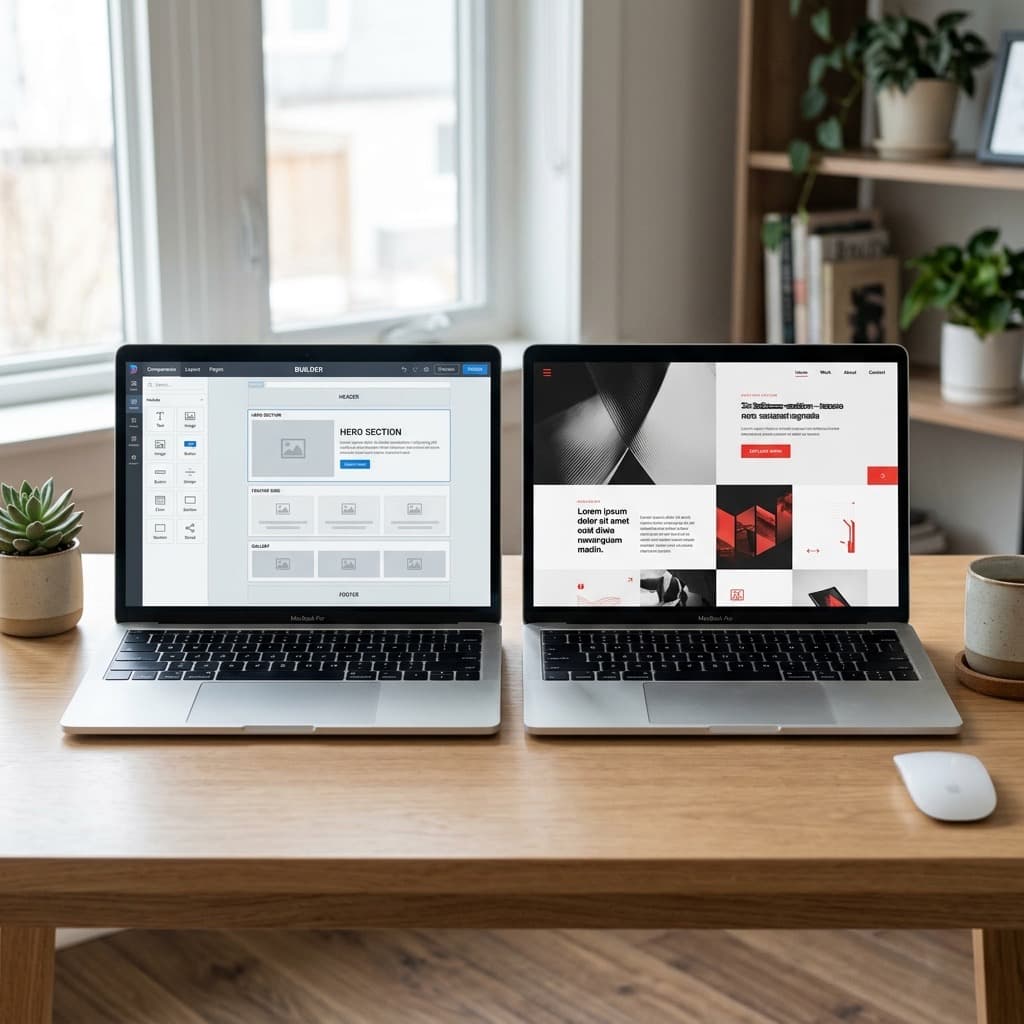
Website builders like Wix and Squarespace get pitched as the obviously cheap option, and for some businesses, they genuinely are. For others, the "$30 a month" framing hides real costs — in time, in performance, and in a hard ceiling on what the site can ever become. Here's how to tell which situation you're actually in.
When a Builder Is Genuinely the Right Call
This isn't an anti-builder argument. For a freelance photographer who needs a simple portfolio, a local restaurant that needs a menu and hours online, or a solo consultant testing a new service before committing to it, a builder can get you live in a weekend for well under $30 a month — and that's a completely reasonable trade for a business at that stage. The mistake isn't using a builder. It's staying on one after the business has outgrown what it can do.
The Hidden Cost: Your Own Time
The "$30/month" framing only counts the subscription. Setting up a genuinely usable site on a builder — not just a placeholder page, but something that actually represents a real business — typically takes 15 to 40 hours for an owner doing it themselves. If your time is worth even $50 an hour, 30 hours of DIY setup is $1,500 in real opportunity cost. Compared against that, a fixed-price, done-for-you small site in a similar range stops looking expensive and starts looking like the actual cheaper option once your own time is counted honestly.
The Ceiling Every Template Platform Has
Every builder platform hits a wall eventually — it's just a question of where. On Wix, it's typically when you need a feature that isn't in their app marketplace. On Squarespace, it's when you want a layout that doesn't exist in their design system; the same constrained editor that prevents genuinely bad design also prevents most custom needs once you have one. A custom-built site doesn't have that ceiling — if you can describe what you need, a developer can build it, without compromising design, functionality, or performance to fit inside a template's assumptions about what a website should look like.
The Part That's Easy to Miss: Performance
This is where custom development has its most measurable, provable advantage. Website builders consistently score lower on Core Web Vitals than custom-built sites, because they're loading generic platform code built to support every possible use case, not just yours. Since Core Web Vitals is now a confirmed, hard Google ranking factor, this isn't just an aesthetic difference — a builder-based site is fighting an uphill technical battle for search visibility that a custom site simply isn't.
Trained Eyes Can Tell, Even If Yours Can't
There's also a quieter cost: template sites have a recognizable look. Someone who's seen a lot of Wix or Squarespace sites can often identify the platform in seconds, and for a local business trying to look more established than its competitors, that recognizability works against you in a way that's hard to quantify but real.
The Actual Decision Point
The honest signal that you've outgrown a builder isn't a specific revenue number — it's whether the site needs to do serious lead generation or compete in a genuinely competitive local market. A simple informational presence can live happily on a builder indefinitely. A site that needs to actually convert visitors, integrate with real business tools, or hold its own on competitive search terms hits the builder ceiling fast, and every month spent working around that ceiling instead of past it is a month of lost leads, not saved money.
Sources: 2026 comparative analysis of website builders vs. custom development for small businesses; independent testing of website builder performance and Core Web Vitals scores; small-business time-cost research on DIY website setup.
Keep reading
How Much Does a Website Redesign Cost? A Small Business Guide
The honest answer is "it depends" — but here's what real industry survey data says small businesses actually spend, and why the cheapest option often costs more in the long run.
Website vs. Web App: Which Does Your Small Business Actually Need?
They sound similar, but they solve different problems. Here's how to tell which one your business actually needs — and when you need both.
What Is AI-Assisted Development? (And Why It's Faster, Not Riskier)
"AI-built" sounds risky if you picture code with zero human oversight. That's not what this is — and the real research on AI coding tools is more nuanced than either the hype or the skepticism suggests.
What Website Downtime Actually Costs a Small Business
A few hours of downtime sounds like a minor inconvenience — until you look at what it actually costs, and how often it happens to sites nobody's watching.
How Often Should a Small Business Blog? What the Data Actually Says
"Post more" isn't wrong, but it's not the whole answer either — here's what the actual traffic data says about how often a small business should be publishing.
Schema Markup Explained: How AI Search Engines Decide What to Cite
Getting cited by ChatGPT or Perplexity isn't random — there's a specific, well-documented technical reason some pages get picked as sources and others don't.
Core Web Vitals Explained: What Google Actually Measures
"Site speed matters for SEO" is old advice. What changed is that Google now measures it with three specific metrics — and in 2026, missing the bar has a real, measurable ranking cost.
Website Maintenance Checklist: What Actually Needs to Happen Every Month
"Set it and forget it" is how most small-business websites get hacked or quietly break. Here's what monthly maintenance actually involves, and how long it really takes.
AI Product Photography: What It Can't Replace About a Real Photo Shoot
AI product photography is genuinely good — and genuinely limited. Here's an honest breakdown of what it replaces, what it doesn't, and why the best results mix both.
Brand Identity and Website Design: Why They Should Be Done Together
A logo from one designer and a website from someone else, six months apart, is one of the most common — and most avoidable — ways small businesses end up with a brand that fights itself.
How to Choose a Web Design Agency: Real Red Flags to Watch For
Most bad agency hires were avoidable — the warning signs were visible before signing, just easy to miss if you don't know to look for them.
Landing Page vs. Homepage: Which Should Get Your Ad Traffic?
Sending ad traffic to your homepage instead of a dedicated landing page is one of the most common — and most measurable — ways small businesses quietly waste ad spend.
What a Freelancer or Photographer Portfolio Site Actually Needs
A beautiful gallery of work isn't a complete portfolio site — here's what's actually missing from most freelancer and photographer sites, and why it's costing them clients.
"AI-Drafted, Human-Edited": What That Workflow Actually Means
"AI-drafted, human-edited" gets said a lot without much explanation of what it actually means — here's the real workflow, and why the human part is doing more work than it sounds like.
Related services
Let's build something that works.
Tell us about your project — we'll get back to you with a straight answer, not a sales pitch.