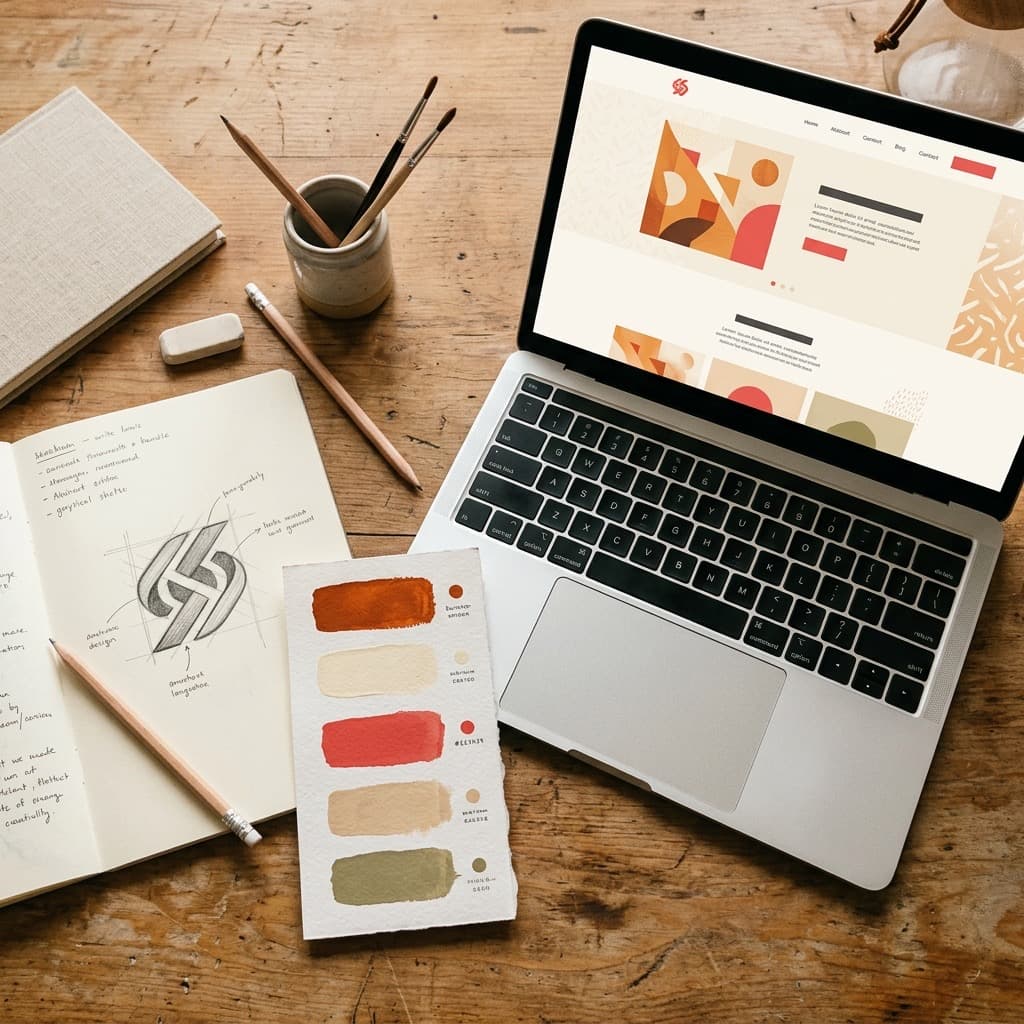
Brand Identity and Website Design: Why They Should Be Done Together
Tanvir Mahedi
Author
It's a common pattern: a business gets a logo designed by one person, then hires someone else to build a website months later, and the two never quite look like they belong to the same company. It's an easy trap to fall into — and a genuinely costly one, backed by real data on what brand consistency is actually worth.
The Revenue Case Is Bigger Than Most Businesses Assume
Brand consistency isn't a soft, hard-to-measure aesthetic preference — it shows up directly in revenue research. Consistent branding has been linked to revenue increases of up to 33% in some analyses, with other research putting the figure around 23%. More conservatively, 68% of companies report that brand consistency added 10–20% growth to their revenue. Put differently: every dollar invested in brand strategy and design can deliver 10–20% revenue growth when it's executed with actual consistency and discipline — the "and discipline" part being exactly what breaks down when the logo and the website come from two disconnected projects.
Why Inconsistency Specifically Hurts Trust
The mechanism isn't abstract. Ninety-two percent of people consider well-designed websites more trustworthy, and 94% of first impressions of a business are design-related — meaning the visual consistency between what someone sees on your website and what they might see on your signage, packaging, or social profiles is doing real trust-building (or trust-eroding) work before anyone reads a word of copy. Separately, 71% of businesses agree that inconsistent brand presentation leads to customer confusion — and confusion is the direct enemy of conversion. A visitor who isn't sure they're on the right site, even for a half-second, is a visitor who's more likely to leave.
Recognition Is a Measurable, Compounding Asset
Using consistent visual branding — the same colors, typeface, and logo treatment everywhere — can increase brand recognition by roughly 80%. That's not a one-time gain; it compounds every time someone encounters the brand again somewhere else, because their brain doesn't have to re-establish "who is this" from scratch. Color plays an outsized role in that recognition specifically: 85% of buyers say colors make brands more recognizable and directly influence their purchasing decisions. A website that uses a different palette than the logo it's supposedly representing is quietly working against its own recognition value.
Design-Led Companies Outperform Over the Long Run
This isn't just a launch-week effect. Companies that lead with design have been shown to outperform market averages by 211% over a ten-year period — a figure that reflects sustained brand and design discipline, not a single good-looking site. Consistency compounds the same way debt or interest does: a small design decision made correctly at the start keeps paying off every time it's reinforced, and keeps costing you a little every time it's contradicted.
Why "Do It Together" Actually Matters, Not Just "Do Both"
The failure mode isn't usually "we never got branding" or "we never got a website" — most small businesses eventually get both. It's that they're built as two disconnected projects, often months apart, by people who never talked to each other. The website designer inherits a logo file and has to guess at intent instead of design decisions; the color palette that worked in a static logo doesn't get properly adapted for a UI with hover states, buttons, and accessibility contrast requirements. Doing them together means the color system, typography, and visual language are designed as one coherent decision from the start — not a logo file handed off to be "matched" after the fact.
What This Looks Like in Practice
Over 70% of small businesses already invest in professional logo design — the gap isn't usually willingness to invest in branding, it's treating the website as a separate, later decision instead of part of the same one. Auditing what already exists, defining one consistent identity, and applying it to the website as the anchor point is often more realistic than starting from zero — particularly for a business whose brand grew piecemeal over time and just needs everything brought back into alignment around a single, deliberate visual system.
Sources: 2026 branding statistics and revenue-impact research; consumer research on website design and trust perception; design-led company performance research.
Keep reading
How Much Does a Website Redesign Cost? A Small Business Guide
The honest answer is "it depends" — but here's what real industry survey data says small businesses actually spend, and why the cheapest option often costs more in the long run.
Website vs. Web App: Which Does Your Small Business Actually Need?
They sound similar, but they solve different problems. Here's how to tell which one your business actually needs — and when you need both.
What Is AI-Assisted Development? (And Why It's Faster, Not Riskier)
"AI-built" sounds risky if you picture code with zero human oversight. That's not what this is — and the real research on AI coding tools is more nuanced than either the hype or the skepticism suggests.
What Website Downtime Actually Costs a Small Business
A few hours of downtime sounds like a minor inconvenience — until you look at what it actually costs, and how often it happens to sites nobody's watching.
How Often Should a Small Business Blog? What the Data Actually Says
"Post more" isn't wrong, but it's not the whole answer either — here's what the actual traffic data says about how often a small business should be publishing.
Schema Markup Explained: How AI Search Engines Decide What to Cite
Getting cited by ChatGPT or Perplexity isn't random — there's a specific, well-documented technical reason some pages get picked as sources and others don't.
Core Web Vitals Explained: What Google Actually Measures
"Site speed matters for SEO" is old advice. What changed is that Google now measures it with three specific metrics — and in 2026, missing the bar has a real, measurable ranking cost.
Website Maintenance Checklist: What Actually Needs to Happen Every Month
"Set it and forget it" is how most small-business websites get hacked or quietly break. Here's what monthly maintenance actually involves, and how long it really takes.
Website Builder vs. Custom Development: When Templates Stop Working
A $30/month website builder isn't always the cheap option it looks like. Here's the honest math on when a template is genuinely fine, and when it starts actually costing you.
AI Product Photography: What It Can't Replace About a Real Photo Shoot
AI product photography is genuinely good — and genuinely limited. Here's an honest breakdown of what it replaces, what it doesn't, and why the best results mix both.
How to Choose a Web Design Agency: Real Red Flags to Watch For
Most bad agency hires were avoidable — the warning signs were visible before signing, just easy to miss if you don't know to look for them.
Landing Page vs. Homepage: Which Should Get Your Ad Traffic?
Sending ad traffic to your homepage instead of a dedicated landing page is one of the most common — and most measurable — ways small businesses quietly waste ad spend.
What a Freelancer or Photographer Portfolio Site Actually Needs
A beautiful gallery of work isn't a complete portfolio site — here's what's actually missing from most freelancer and photographer sites, and why it's costing them clients.
"AI-Drafted, Human-Edited": What That Workflow Actually Means
"AI-drafted, human-edited" gets said a lot without much explanation of what it actually means — here's the real workflow, and why the human part is doing more work than it sounds like.
Related services
Let's build something that works.
Tell us about your project — we'll get back to you with a straight answer, not a sales pitch.