Schema Markup Explained: How AI Search Engines Decide What to Cite
Tanvir Mahedi
Author
Two businesses can have nearly identical web pages — same information, similar quality — and only one of them shows up as a cited source in ChatGPT or a Google AI Overview. That's rarely random. It's often down to a specific, unglamorous technical detail: whether the page has structured data markup at all.
What Schema Markup Actually Is
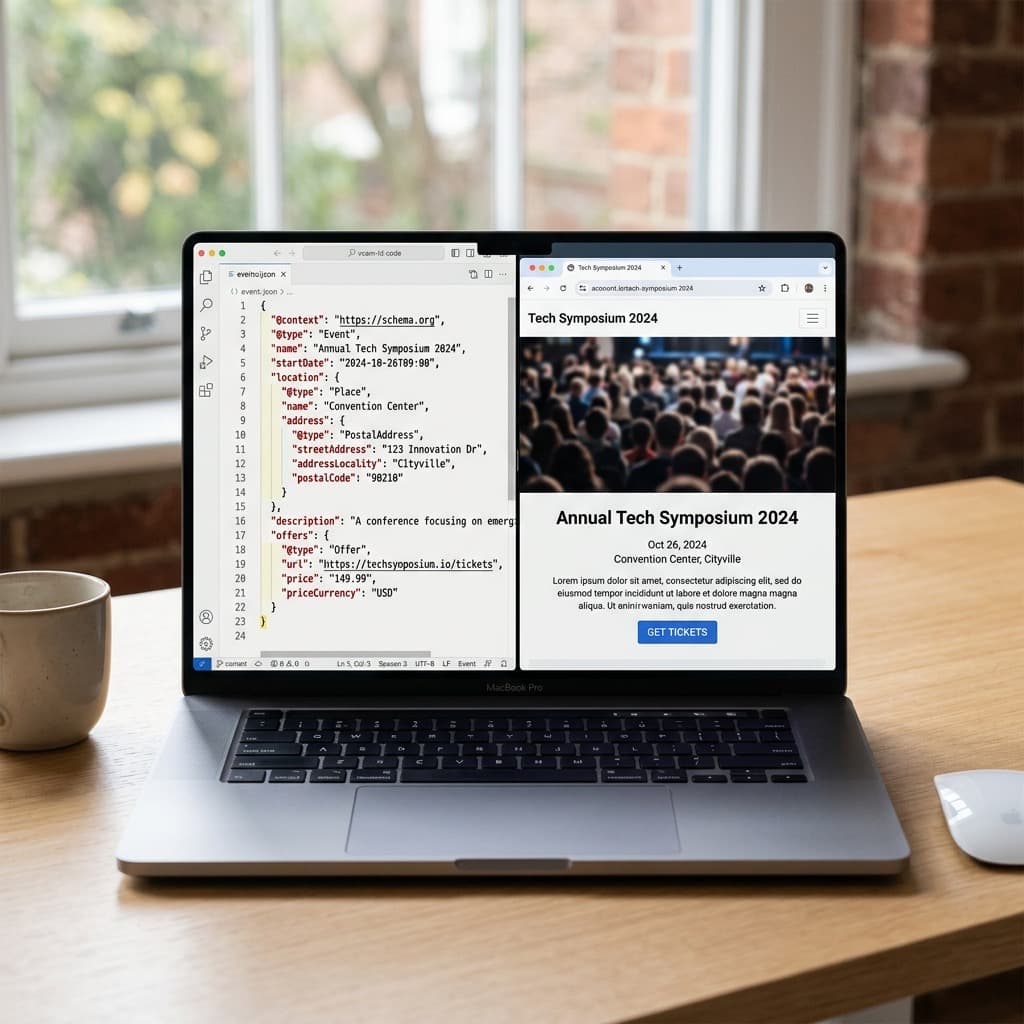
Schema markup (also called structured data) is a standardized way of labeling the content on a page so a machine — not just a human reader — can tell what everything means. A human reading a page can tell the difference between a business's name, its phone number, and a customer question without thinking about it. A crawler can't, unless that structure is explicitly marked up. Schema markup is that explicit label: "this text is a business name," "this is a phone number," "this block is a question and this is its answer."
The current standard format nearly every major platform reads is called JSON-LD — a block of structured code embedded in a page that search engines and AI crawlers parse directly, separate from the visible page content.
Why This Matters More With AI Search Than It Did With Classic SEO
Traditional Google search could get away with mostly reading plain text and figuring out context from surrounding words. AI systems generating a direct answer — instead of a list of blue links — have a harder problem: they need to decide, in the moment, which specific source to trust and cite for a specific claim. Structured data gives them an explicit, verifiable signal to lean on instead of just inferring meaning from prose.
That difference shows up directly in citation data. Content with proper schema markup has roughly a 2.5x higher chance of appearing in AI-generated answers than content without it. Looking at actual citations: about 65% of pages cited by Google AI Mode, and 71% of pages cited by ChatGPT, include structured data. That's not a small correlation — it means the majority of sources these systems are actually citing have this in common.
Which Schema Types Actually Matter
Not all schema types carry equal weight with every platform, but a few show up consistently as high-value:
- Organization. Identifies who you actually are as a business — used by AI systems to correctly attribute information to the right brand instead of a generic or wrong source.
- FAQPage. Marks up literal question-and-answer content, which conversational AI tools weight heavily because it maps directly onto the question-and-answer format they're generating for the user.
- Article / BlogPosting. Identifies a piece of content as a genuine article with an author, publish date, and publisher — signals AI systems use to judge whether a source is a maintained, credible piece of content versus an undated scrap of text.
- Service / Product. Helps AI tools understand exactly what you offer, which matters when someone asks an AI assistant a comparison or recommendation question rather than a pure informational one.
Different platforms lean on different combinations: ChatGPT Search crawls alongside Bing's index and puts real weight on FAQPage and Article schema for conversational answers, plus Organization schema for brand attribution. Perplexity aggregates and cites multiple sources per response, and FAQPage, Organization, and Product schema each help content surface as one of its footnoted citations.
What Happens Without It
A page with no schema markup isn't invisible to AI crawlers — the text still gets read. But without structured signals, the crawler is left inferring everything from context, which is exactly the situation where a competitor's clearly-labeled page becomes the safer, easier choice to cite. It's the difference between handing someone a clearly labeled filing cabinet and handing them a box of unsorted papers with the same information in it — both are technically readable, but only one gets picked when speed and confidence matter.
This Isn't a One-Time Setup
Schema markup isn't something you add once and forget — pages change, services get added, FAQs get updated, and stale or inconsistent markup can end up contradicting what's actually on the page, which is worse than having none. Treating it as ongoing technical maintenance, not a launch-day checkbox, is what keeps a site's structured data actually matching its content as the business evolves — which is the whole reason AI systems trust it as a signal in the first place.
Sources: SE Ranking research on structured data prevalence in Google AI Mode and ChatGPT citations; industry research on schema markup's measured impact on AI citation rates; platform-specific analysis of ChatGPT Search and Perplexity sourcing behavior.
Keep reading
How Much Does a Website Redesign Cost? A Small Business Guide
The honest answer is "it depends" — but here's what real industry survey data says small businesses actually spend, and why the cheapest option often costs more in the long run.
Website vs. Web App: Which Does Your Small Business Actually Need?
They sound similar, but they solve different problems. Here's how to tell which one your business actually needs — and when you need both.
What Is AI-Assisted Development? (And Why It's Faster, Not Riskier)
"AI-built" sounds risky if you picture code with zero human oversight. That's not what this is — and the real research on AI coding tools is more nuanced than either the hype or the skepticism suggests.
What Website Downtime Actually Costs a Small Business
A few hours of downtime sounds like a minor inconvenience — until you look at what it actually costs, and how often it happens to sites nobody's watching.
How Often Should a Small Business Blog? What the Data Actually Says
"Post more" isn't wrong, but it's not the whole answer either — here's what the actual traffic data says about how often a small business should be publishing.
Core Web Vitals Explained: What Google Actually Measures
"Site speed matters for SEO" is old advice. What changed is that Google now measures it with three specific metrics — and in 2026, missing the bar has a real, measurable ranking cost.
Website Maintenance Checklist: What Actually Needs to Happen Every Month
"Set it and forget it" is how most small-business websites get hacked or quietly break. Here's what monthly maintenance actually involves, and how long it really takes.
Website Builder vs. Custom Development: When Templates Stop Working
A $30/month website builder isn't always the cheap option it looks like. Here's the honest math on when a template is genuinely fine, and when it starts actually costing you.
AI Product Photography: What It Can't Replace About a Real Photo Shoot
AI product photography is genuinely good — and genuinely limited. Here's an honest breakdown of what it replaces, what it doesn't, and why the best results mix both.
Brand Identity and Website Design: Why They Should Be Done Together
A logo from one designer and a website from someone else, six months apart, is one of the most common — and most avoidable — ways small businesses end up with a brand that fights itself.
How to Choose a Web Design Agency: Real Red Flags to Watch For
Most bad agency hires were avoidable — the warning signs were visible before signing, just easy to miss if you don't know to look for them.
Landing Page vs. Homepage: Which Should Get Your Ad Traffic?
Sending ad traffic to your homepage instead of a dedicated landing page is one of the most common — and most measurable — ways small businesses quietly waste ad spend.
What a Freelancer or Photographer Portfolio Site Actually Needs
A beautiful gallery of work isn't a complete portfolio site — here's what's actually missing from most freelancer and photographer sites, and why it's costing them clients.
"AI-Drafted, Human-Edited": What That Workflow Actually Means
"AI-drafted, human-edited" gets said a lot without much explanation of what it actually means — here's the real workflow, and why the human part is doing more work than it sounds like.
Related services
Let's build something that works.
Tell us about your project — we'll get back to you with a straight answer, not a sales pitch.