"AI-Drafted, Human-Edited": What That Workflow Actually Means
Tanvir Mahedi
Author
"AI-drafted, human-edited" shows up in a lot of content marketing pitches without much explanation of what it actually involves day to day. Given that Google's current guidance draws a real, meaningful line between this and fully automated content, it's worth being specific about what the workflow actually is — and isn't.
What Google Actually Cares About
Google's current policy on AI-generated content is explicit that it focuses on quality rather than how content is produced — it doesn't favor human-written content over AI-assisted content as a blanket rule, as long as the final piece is original and delivers real value. What it does care about is whether the result meets the same quality bar either way, evaluated through the same E-E-A-T framework — expertise, experience, authoritativeness, trustworthiness — applied to any content, regardless of how the first draft came together.
Where "Human-Edited" Actually Does the Work
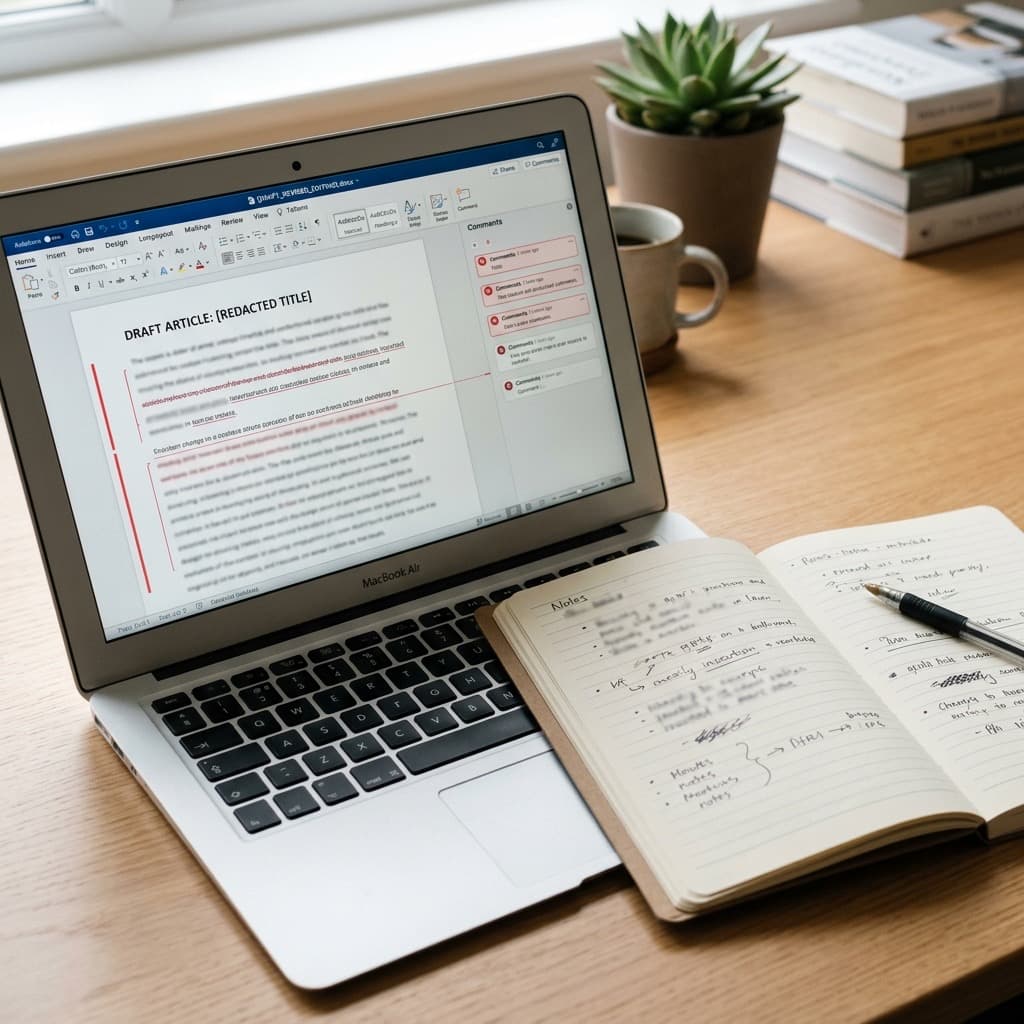
The real workflow, done properly, looks like this: a human sets the topic, the angle, and the specific facts and sources the piece needs to include — AI isn't choosing what to write about or what to claim. AI produces a first draft against that direction. Then a human does a genuine edit pass: fact-checking every claim, adding first-hand expertise or a specific point of view the draft doesn't have on its own, cutting the generic filler AI tends to default to, and making sure the piece actually says something instead of restating the topic in more words. Google's own guidance describes exactly this pattern — AI as a drafting tool that requires substantial human editing, fact-checking, and the addition of unique insight — as the workflow that consistently meets current quality standards, as distinct from letting a model generate and publish content with no real editorial pass in between.
What Separates This From a Low-Quality AI Dump
The penalties in Google's current guidance target content-quality problems, not AI usage itself — properly created AI-assisted content with real human oversight typically faces no penalty at all. What does get penalized is the pattern that's easy to spot: generic, interchangeable phrasing that could apply to any business in the category, no original insight or first-hand perspective anywhere in the piece, repetitive structure across many pages that all say the same thing in slightly different words, no real author attribution, and factual claims that don't hold up when checked. None of those problems are caused by AI touching the draft — they're caused by nobody doing the human part of the workflow afterward.
Why This Matters More As AI Content Becomes More Common
As more of the content search engines and AI tools encounter is at least partially AI-assisted, the content that keeps standing out is the content that actually has something in it a template couldn't produce — a specific fact, a real opinion, a first-hand detail. That's precisely the part a human editor is responsible for adding. A business that treats "human-edited" as a light proofread for typos is skipping the part of the process that's actually doing the quality work; a business that treats it as a real editorial pass — fact-checking, cutting the generic parts, inserting something genuinely specific — is doing what the workflow is actually supposed to do.
Transparency Is Part of the Standard, Not an Afterthought
Current guidance also establishes real expectations around transparency — being upfront that content creation involves AI assistance, rather than presenting an entirely automated process as fully human-written. That's consistent with the honest framing of the workflow itself: AI drafts, a human directs and verifies, and neither part of that is something to obscure.
The Practical Takeaway
"AI-drafted, human-edited" is a real, specific claim with real requirements behind it — not a euphemism for "published with minimal review." Done properly, it's the difference between content that reads like every other AI-generated page on the same topic and content that has an actual point of view, verified facts, and something worth reading in it. The AI speeds up the mechanical part. The human is still responsible for whether it's actually good.
Sources: Google's 2026 AI content guidelines and policy analysis; E-E-A-T framework research; industry research on AI-assisted content quality and Google's helpful content standards.
Keep reading
How Much Does a Website Redesign Cost? A Small Business Guide
The honest answer is "it depends" — but here's what real industry survey data says small businesses actually spend, and why the cheapest option often costs more in the long run.
Website vs. Web App: Which Does Your Small Business Actually Need?
They sound similar, but they solve different problems. Here's how to tell which one your business actually needs — and when you need both.
What Is AI-Assisted Development? (And Why It's Faster, Not Riskier)
"AI-built" sounds risky if you picture code with zero human oversight. That's not what this is — and the real research on AI coding tools is more nuanced than either the hype or the skepticism suggests.
What Website Downtime Actually Costs a Small Business
A few hours of downtime sounds like a minor inconvenience — until you look at what it actually costs, and how often it happens to sites nobody's watching.
How Often Should a Small Business Blog? What the Data Actually Says
"Post more" isn't wrong, but it's not the whole answer either — here's what the actual traffic data says about how often a small business should be publishing.
Schema Markup Explained: How AI Search Engines Decide What to Cite
Getting cited by ChatGPT or Perplexity isn't random — there's a specific, well-documented technical reason some pages get picked as sources and others don't.
Core Web Vitals Explained: What Google Actually Measures
"Site speed matters for SEO" is old advice. What changed is that Google now measures it with three specific metrics — and in 2026, missing the bar has a real, measurable ranking cost.
Website Maintenance Checklist: What Actually Needs to Happen Every Month
"Set it and forget it" is how most small-business websites get hacked or quietly break. Here's what monthly maintenance actually involves, and how long it really takes.
Website Builder vs. Custom Development: When Templates Stop Working
A $30/month website builder isn't always the cheap option it looks like. Here's the honest math on when a template is genuinely fine, and when it starts actually costing you.
AI Product Photography: What It Can't Replace About a Real Photo Shoot
AI product photography is genuinely good — and genuinely limited. Here's an honest breakdown of what it replaces, what it doesn't, and why the best results mix both.
Brand Identity and Website Design: Why They Should Be Done Together
A logo from one designer and a website from someone else, six months apart, is one of the most common — and most avoidable — ways small businesses end up with a brand that fights itself.
How to Choose a Web Design Agency: Real Red Flags to Watch For
Most bad agency hires were avoidable — the warning signs were visible before signing, just easy to miss if you don't know to look for them.
Landing Page vs. Homepage: Which Should Get Your Ad Traffic?
Sending ad traffic to your homepage instead of a dedicated landing page is one of the most common — and most measurable — ways small businesses quietly waste ad spend.
What a Freelancer or Photographer Portfolio Site Actually Needs
A beautiful gallery of work isn't a complete portfolio site — here's what's actually missing from most freelancer and photographer sites, and why it's costing them clients.
Related services
Let's build something that works.
Tell us about your project — we'll get back to you with a straight answer, not a sales pitch.